
The Westfield War Memorial Village Lancaster charity has published a book about the history of the thriving and popular settlement within a conservation area in the city. There isn’t a direct connection to Ryelands House, but there is a connection to its development, thanks to a member of Lord Williamson’s family: his step-daughter, Miss Frances Geraldine Whalley.
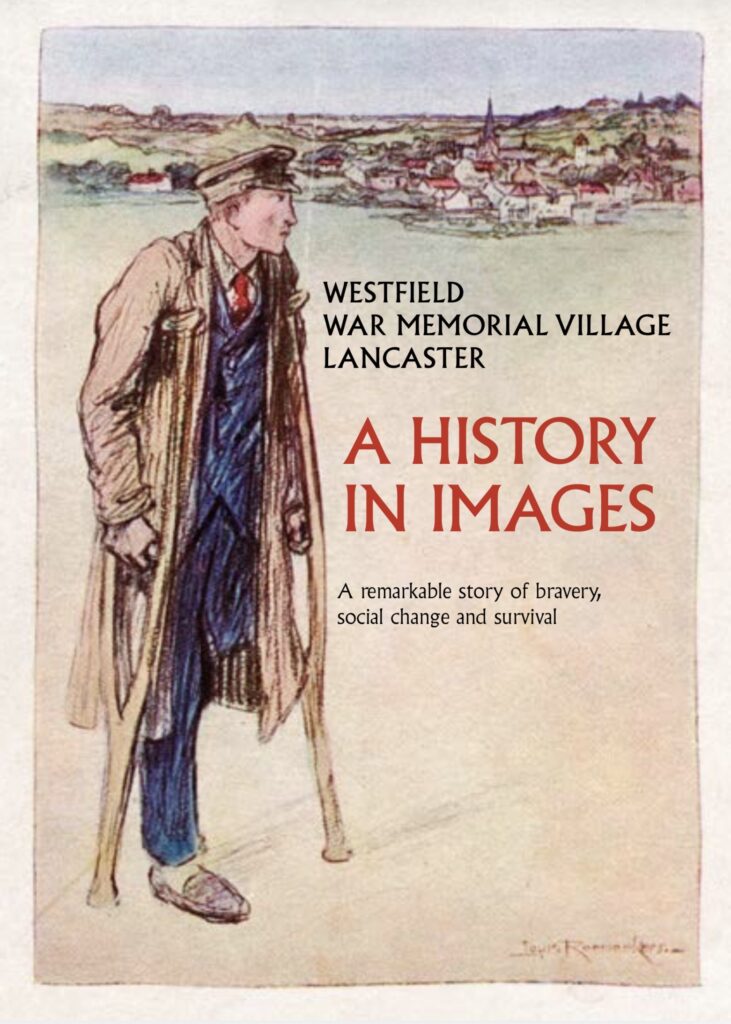
Its publication was made possible thanks to the Heritage Fund, and input from many local people, Westfield War Memorial Village Lancaster: A History In Images is available now as a physical edition in local libraries and digitally on the Westfield charity website.
An enclosed, safe and nurturing community, as well as offering housing Westfield War Memorial Village has provided comfort and peace of mind for its residents since its inception in 1919. Well-maintained and tree-lined grass verges, an attractive memorial garden, shrubberies, flower beds, a bowling green and striking example of war statuary by an innovative female sculptress, Jennifer Delahunt, provide the aesthetic setting for this unique gated village.
The project gained the support of the head of the Storey family, Herbert Lushington Storey, who became directly involved in Lancashire landscape designer and town planner Thomas H. Mawson’s “dream” of creating purpose- built villages for disabled soldiers. The book notes how the two had embarked upon a professional association that can be traced back to 1907, when Mawson completed work on Herbert’s mansion at Bailrigg in Lancaster. Herbert Lushington Storey was to prove Mawson’s staunchest ally in relation to his plans for housing for disabled servicemen, even touring the country with him to reconnoitre potential sites for settlements around the country.

The project did not, however, get support from local industrialist Lord Williamson who, freelance heritage manager, writer and musician Dr. Martin Purdy tells the Ryelands Trust “had a rather complicated relationship with the Storeys, whom he saw as competitors in business and socially.
“They had asked him to support the Westfield venture but prior to this he had already effectively stopped supporting charities in Lancaster because of the trade union disputes at his factory before the start of the First World War, which he (a staunch opponent of unionism) took as a personal betrayal by his local workforce.”
However, following Lord Ashton’s death, his step-daughter, Frances Geraldine Whalley, actively sought to rebuild bridges across the city, with generous charitable donations, including at Westfield after the Second World War, where her donation helped to fund new homes for veterans impacted by that conflict.”
“The book doesn’t go into Lord Ashton’s lack of a direct relationship with Westfield (indirectly, it’s worth noting that we know many Westfield residents worked at his factory) but does acknowledge the funding provided by his step-daughter,” Martin notes.
Frances Geraldine Whalley
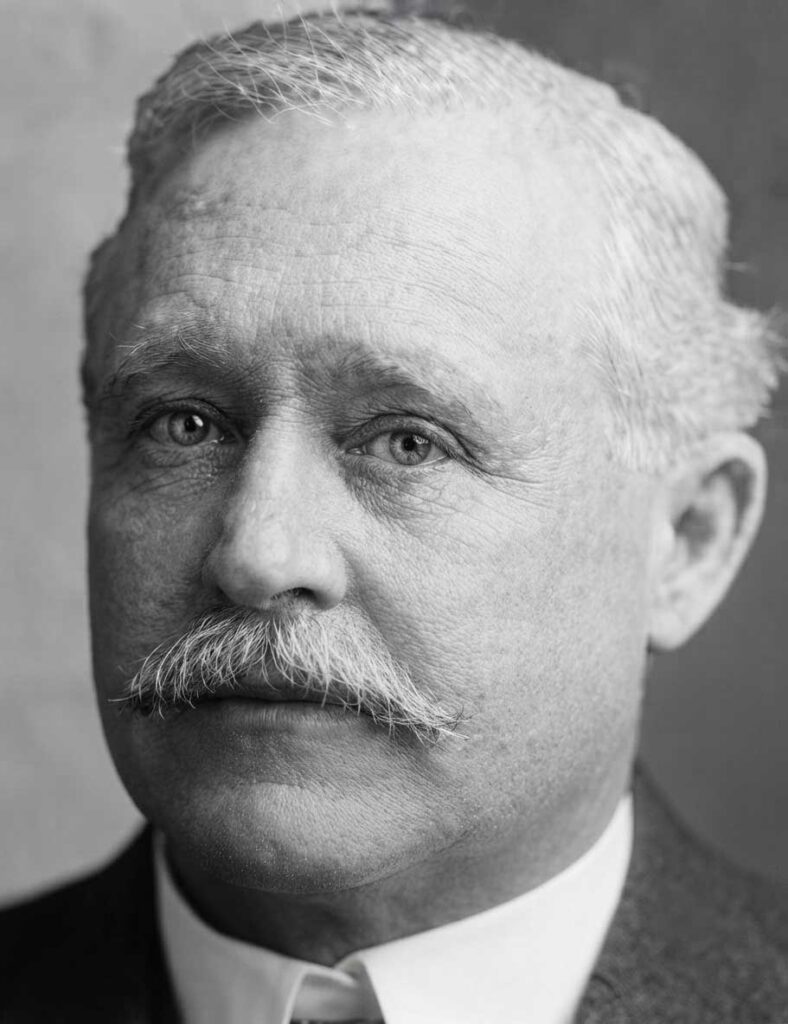

Born in Halton, Miss Frances Geraldine Whalley (1882–1939) was the stepdaughter of the millionaire industrialist James Williamson, 1st Baron Ashton (the “Lino King”). Her mother, Florence Maud Daniel, was the widow of Colonel Joseph Lawson Whalley and became Lord Ashton’s third wife, Lady Ashton, in 1909. Miss Whalley kept her mother’s first married surname.
Her father formerly commanded the 3rd and 4th Militia Battalions of the King’s Own Royal Lancaster Regiment. Her only brother, Captain Julian Lawson Whalley, of the Essex Regiment, was killed at Cambral in 1917.
Sadly, Frances died suddenly in 1939 aged just 57, at her home at Heaves, near Kendal, where she lived with her mother, possibly due to a heart attack. Her estate was valued at £116,309 – close to £10 million in today’s money.
A report of her sudden passing in the Lancaster Guardian on 9th June 1939 notes that “Only the previous night. Miss Whalley, who was 57 years of age, attended an art exhibition and lecture at Morecambe and Heysham, along with Lady Ashton, who Is President of the Morecambe and Heysham Art Society. Miss Whalley appeared to be in her usual good state of health when he retired to bed … it is believed that during the night, Miss Wnalley suffered a heart attack.
“Miss Whalley’s many friends and acquaintances in Lancaster, Morecambe and district, were deeply shocked by the news of her death, and Lady Ashton has received many messages of sympathy.”
At her funeral, at Lancaster Priory and Parish Church the same day, the newspaper later reported, the Bishop of Lancaster Rev. B. Pollard spoke of her work for the community, noting all she had done for the community, “her constant readiness to place herself at the service of the community and to help in every possibly way”.
Like her mother, Lady Ashton, Frances Whalley was keenly interested in agriculture, and shortly before her death had indicated she was looking forward to the Royal Lancashire Show which was to take place at White Lund, midway between Lancaster and Morecambe. She was closely associated with the Lancaster Agricultural Society, and was President of the Lancaster Young Farmers’ Club.
Miss Whalley was also prominent In political circles, as vice president of the Lancaster Conservative and Unionist Association, and a member of the Executive Committee; vice-chairman of the Lancaster section of the Divisional Women’s branch; chairman of the Skerton Women’s branch; deputy chairman of the Lancaster Park Ward Women’s branch, and president of the Young Britons’ Divisional Central Committee.
“Her activities were varied, but perhaps dearest to her heart was that religious teaching,” the Lancaster Guardian noted, “and her death leaves unfinished one of the greatest ambitions of her life. It was to erect at St. Luke’s, Skerton, a memorial hall for religious and social purposes. She was closely identified with St. Luke’s, because of her only sister, Mrs. Ellwood. of Richmond House. Lancaster who is the widow of the late Rev. T. E. Ellwood, former Vicar of St. Luke’s.”
Miss Whalley was a benefactor to many charities in the fields of agriculture, animal welfare, medicine, religion and politics. Like her family before her, she supported St Luke’s Church in Skerton and through her executors, gifted £5000 to Westfield War Memorial Village to build three cottages, in memory of her father and her brother. The houses were built after the Second World War.
A report in the Lancaster Guardian in August 1939 reported her bequests following her death, including the branches of several local charities, the RSPCA and NSPCC among them. Lancaster Civic Vision notes she bequeathed her extensive and impressive collection of china and porcelain to Lancaster City Museum, and gave £1750 to Royal Lancaster Infirmary; her mother and father-in-law were even more generous benefactors.
“Today the most recognisable reminder of Miss Whalley is Miss Whalley’s Field in east Lancaster, off Derwent Road,” notes Lancaster Civic Vision. “In her will, dated 1938, Miss Whalley gave a sum of up to £12,000 to establish a ‘recreation ground for the use and enjoyment and benefit exclusively or mainly of children residing in the Borough of Lancaster’.
“After the Second World War had ended, a Trust Deed was agreed in 1951 by her will’s executors who had obtained 5.825 acres from the Ministry of Education. The Trust Deed transferred the land to the care of Lancaster Corporation to create and maintain the site as the ‘Whalley Playground’. The Corporation received £5000 for the site’s maintenance and £400 for playground equipment.”
The Whalleys and their Richmond House are commemorated in the names of Richmond Avenue and Whalley Road in north Skerton. Miss Whalley is buried in Lancaster Cemetery, next to family members.
• If you have any images or stories about your time on the village, Westfield War Memorial Village Lancaster charity would love to hear or see them. Contact Dr. Martin Purdy via martinpurdy@talktalk.net