
Compiled by Matthew Cole, John Freeman and Simon Gershon | Last Updated on Tuesday 2nd July 2026
Further features about the history of Ryelands are linked below. For a general introduction to Ryelands House, please visit our “About Ryelands House” Page
Please note that this article includes a number of links to the British Newspaper Archive which require a subscription to access
Before the Nineteenth Century, Ryelands was used for farming, droving, and as a resting place for travellers.
1833
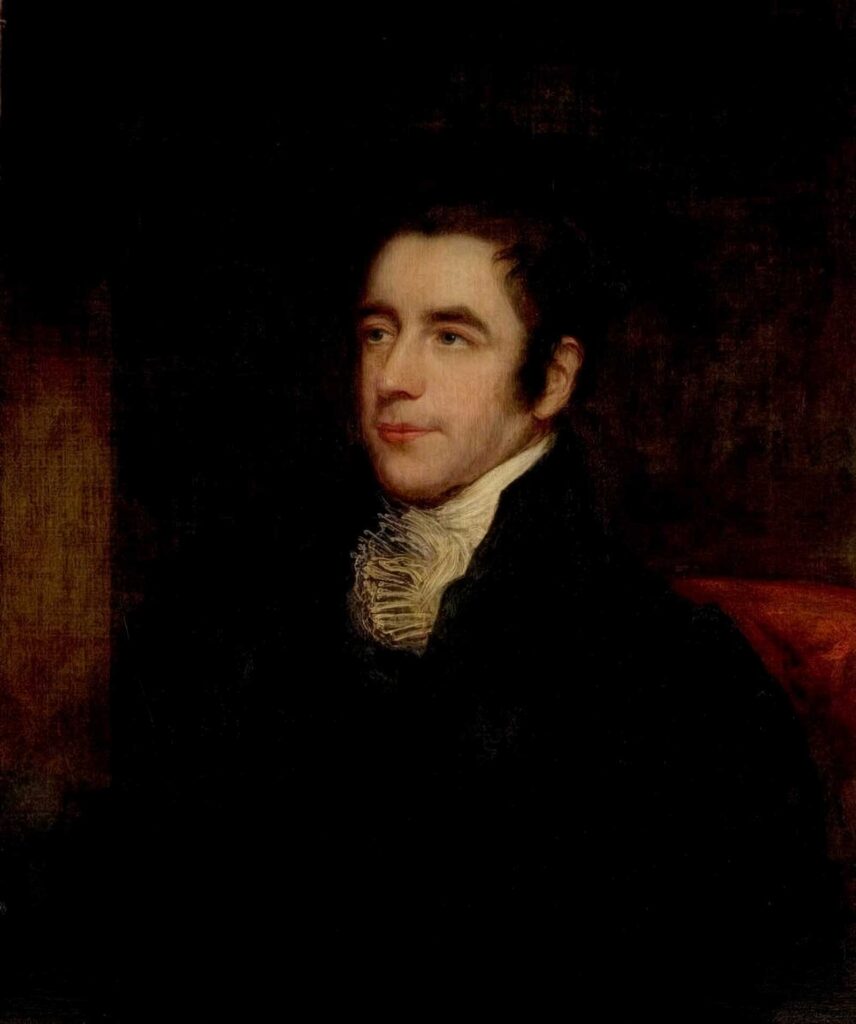
Land at Ryelands was bought for £8,700 by Jonathan Dunn of Lune Cottage, a carriage-builder who was twice Mayor of Lancaster and a director of Lancaster’s first railway company. Within two years Dunn had built Ryelands House and lived there with his family and staff.
1842
Jonathan Dunn was re-elected Mayor of Lancaster as a Conservative in November 1842.
1857
On the death of Jonathan Dunn, Ryelands passed to his son Thomas Rowlandson Dunn.
1874
Ryelands and its its 93-acre estate were bought for £24,500 by James Williamson Snr., former Mayor of Lancaster and founder of Williamson’s linoleum manufacturers.
1879
On the death of James Williamson Snr. Ryelands passed to his son James, who became Lancaster’s MP and was later Lord Ashton.
1883

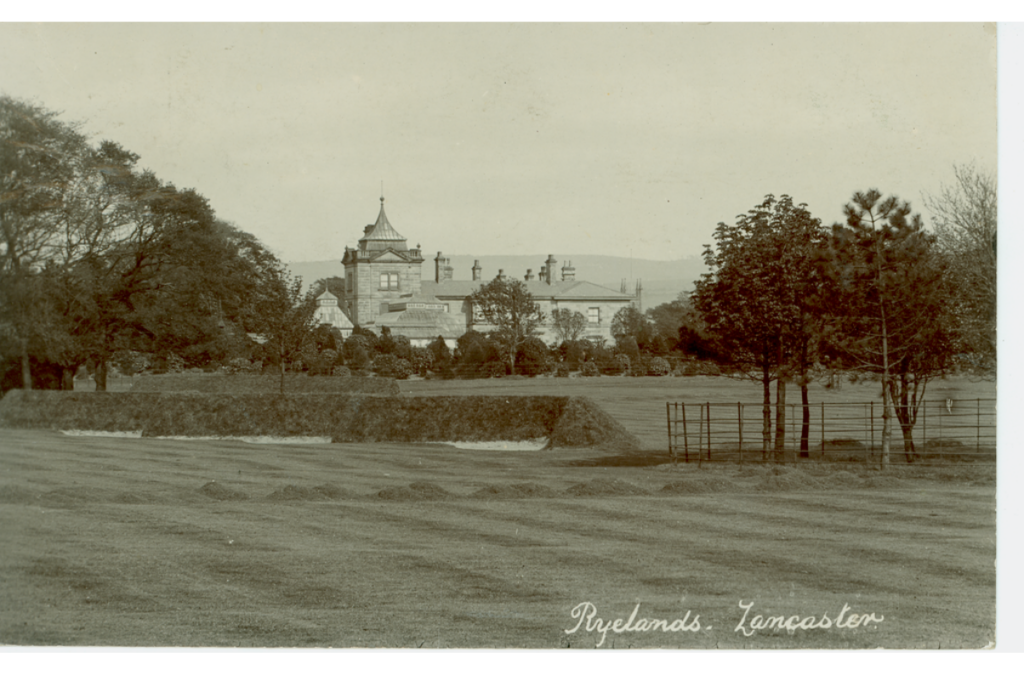
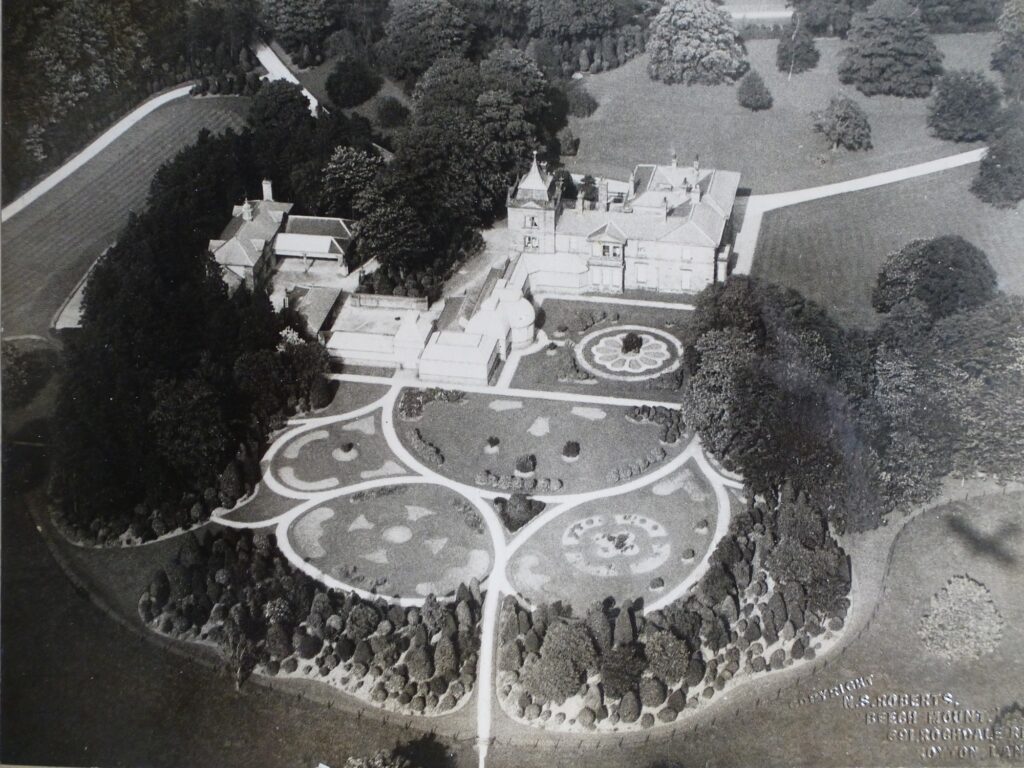
Lancaster architects Paley & Austin undertook significant extension to Ryelands House, including its tower and conservatory.
1887
In January 1887, a celebratory dinner is held to mark the launch of The Ryelands, a schooner built partly by the owner of Ryelands House, James Williamson. The ship later went on to feature in Hollywood blockbuster films, before coming home as a showpiece on Morecambe front.
• Read Matthew Cole’s feature, “From Sea to Screen and Back Again: The Ryelands”
1910s
One member of staff working for Lord Ashton during the First World War was Elizabeth Farnworth, who later lived in Alexandra Road with her husband George, who worked at Williamson’s factory after the First World War, and, in retirement, as a school crossing patrol officer for Ryelands School, for four years.
Mrs. Farnworth worked during the war at Ryeland’s House for Lord Ashton, tending the gardens of the residence. The couple celebrate their golden wedding anniversary in May 1966.
At a ceremony at Ryelands House in September 1938, an ex-Mayor of Lancaster, Alderman E C. Parr, chairman of the City Finance Committee, caused amusement with his recollection of his war days, when, as a special constable, he was one of the night guards who were entitled to carry arms when on duty at bridges and vulnerable points in an area which included the White Lund filling factory. The Lancaster Guardian reported how he related the story his experiences as a sergeant in charge of specials on the Skerton beat, which included Ryelands House, and he was quite frank In his admission that he was not averse to finding a chance to go to the back door of Lord Ashton’s mansion, where he found a bowl of soup, offered by the staff, most acceptable!
1920s
In 1922, part of the Ryelands estate’s lands were sold to Lancaster Corporation to make way for the new Road to Morecambe.
1930s

A report in the Lancashire Evening Post for Wednesday 28th January 1931, noted that on the death of Lord Ashton, the Estate, including Lune Villa, “and all his lands beyond the railway on the Morecambe side of the estate and land bounded by Scale Hall Lane” were offered for sale to Lancaster Corporation– now Lancaster City Council.
“Ultimately certain alterations took place with regard to the property available for disposal, and Lune Villa was withdrawn from the proposed sale.”
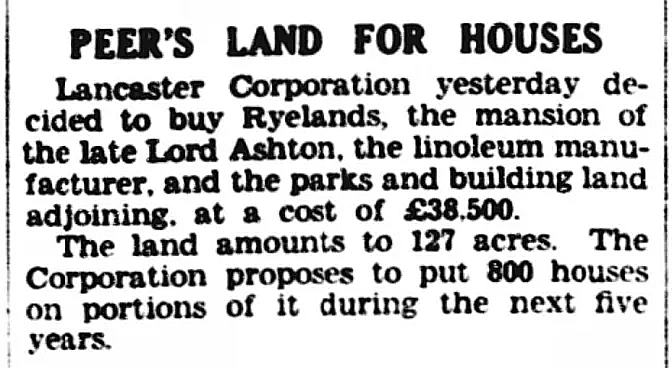
On Thursday 29th January 1931, such was the continued interest in the late Lord Ashton’s affairs, that even national papers such as the Daily Herald noted the sale of Ryelands House and the surrounding land for £38,5000.
• Lancaster Secrets: Lune Villa, Skerton’s connection with Beatrix Potter, Romance and Tragedy
The negotiations for sale were conducted by the administrators of Ashton’s Estate, Lancaster-based auctioneers Procter and Birkbeck.
The whole sale, including Dacrelands House, now Dacrelands Clinic, cost £38,500, encompassing about 60 acres of land, the Council looking to develop some of it for housing.
In all, the Corporation took possession of over 110 acres of land together with the mansion which, according to a report the same day in the Yorkshire Post and Leeds Intelligencer, for example, constituted “an island bounded four roads, the main road north, two roads to Morecambe, and a fourth road leading from one to the other of the Morecambe roads.
“They purpose developing the 63 acres lying the west the L.M.S. main railway line for housing purposes in association with their five year scheme under which they are to erect a further eight hundred dwellings. The future of the mansion and park and grounds is a matter which will be decided in the near future. There is feeling in the town that the mansion should lie preserved as a memorial to Lord Ashton, and its environs and the park and grounds should be retained as an open space with playing fields.”
The following month, February 1931, the Corporation was ready to consult “the rate payers of Lancaster” on the future of Ryelands House when it took possession on 12th May. The Lancaster Guardian of 25th February 1931 reports the then Mayor, Councillor Hodgkinson, fully agreed with another councillor, Doctor Mannix “that the new owners of Ryelands, ratepayers of Lancaster, should be encouraged to take an interest in their new property”.
“I am sure there will be no lack of suggestions,” said the Mayor. “As for what Dr. Mannix has said I should think the sub-committee will deal with that. I can add that the public will not be debarred in any way from voicing its opinion as to the future of Ryelands.”
Alderman J.E. Oglethorpe was chairman of the Council’s Finance Committee and the Corporation sub-committee handling Ryelands related affairs, including the building of the Ryelands Estate. (His father, perhaps, is listed as one of those in attendance at the funeral of Richard Smalley in 1901).
In newspaper reports, it’s noted he hoped that it was intended that some of the late Lord Ashton’s relatives would take up residence at Lune Villa.
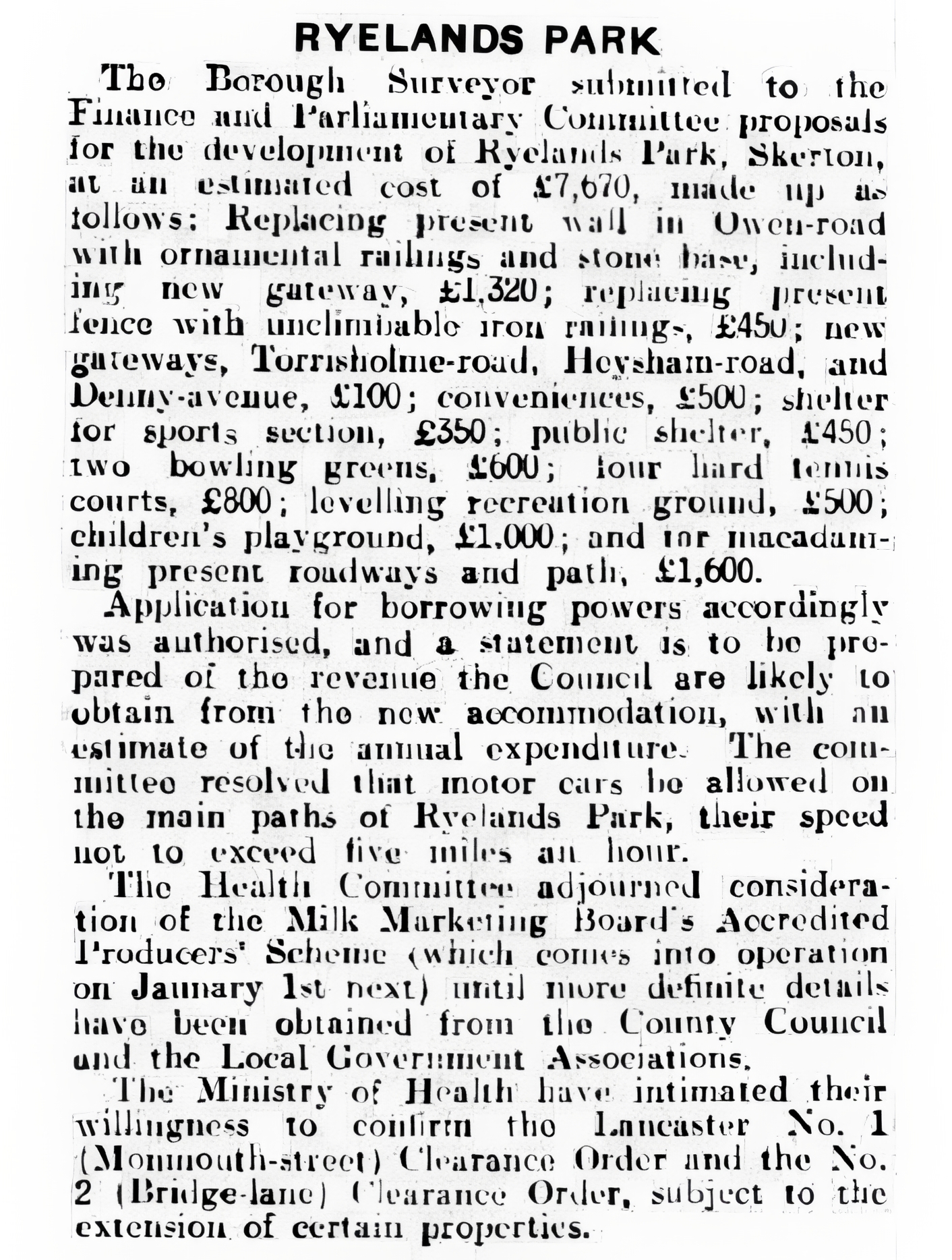
Tenders from builders to bid to build Ryelands Estate were published in regional newspapers in July 1932. Many were built cheaply, at a cost of £266 each.
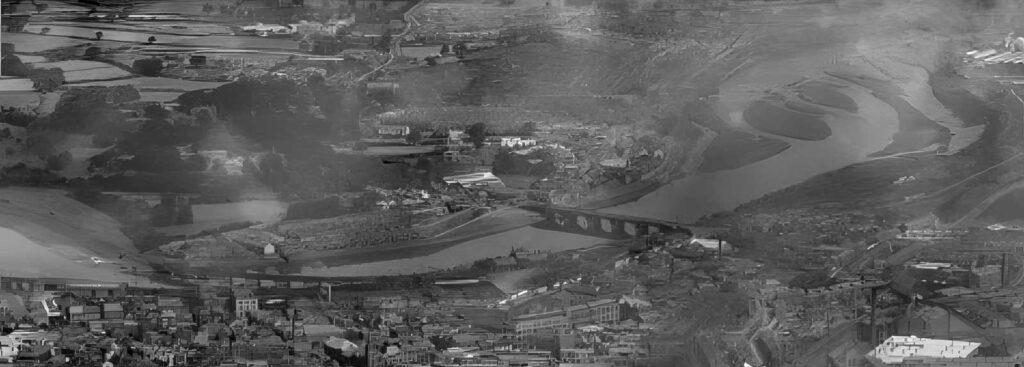
By 1933, the Ryelands had become a public park. The House was used to provide meeting space for an “Aged Men’s Club”, the Skerton Women’s Institute, and other organisations.
Alderman J.E. Oglethorpe was chairman of the Council’s Finance Committee and the Corporation sub-committee handling Ryelands related affairs, including the building of the Ryelands Estate. (His father, perhaps, is listed as one of those in attendance at the funeral of Richard Smalley in 1901). In newspaper reports, it’s noted he hoped that it was intended that some of the late Lord Ashton’s relatives would take up residence at Lune Villa.
Work started on Ryelands housing estate of 346 homes, and the 46-acre recreational park with its bandstand, football and cricket pitches, tennis courts and bowling green.
By April 1934, the Lancashire Evening Post reported Ryelands House was regarded as “the centre of a variety of municipal enterprises“.
The House was used as a location for an annual exhibition of work by members of Skerton Women’s Evening Institute in 1936 and further exhibitions in 1937. Evening Institutes were open to all women over 17 years of age, and provided instruction in a wide range subjects.
Its work encouraging artists was seen as complementary to that at the Storey Institute and Queen Street Women’s Institute, and Dallas Road School, for Junior work.
At the opening of their meeting in March 1937, its chair, Mrs Walsh, declared the finest answer to “Nazism, Communism, Fascism and State officialism” was to “swamp the countries with Women’s Evening Institutes.” (British Newspaper Archive link, subscription required for access). The home was the foundation of the Empire, she explained, and women were the guiding Influence of the home. “Why need England tremble?” she asked.
A post World War Two news item notes the Women’s Institute began to use Ryelands House for meetings in 1932, with 126 enrolled members; rising to 326 before the war began.
It was also a meeting place for the Skerton Aged Men’s Rest Association, who held their annual supper there, attended by many local dignataries, including the Mayor and Mayoress, in December 1936 (British Newspaper Archive link).
Other groups using the House included the North Lancashire Rural Book Club; the Lancaster and District Sub-Committee for the Welfare of the Blind, who held their annual garden party, attended by the Mayor and Mayoress.
The House was also used to local election voting counts.
In 1938, Ryelands House was being used for pre-natal and ante-natal clinics, by the Lancaster and District Joint Hospital Board, as part of a wider extension of health services before the war, services that expanded under the Local Government Act of 1929. (Although the 1918 Maternity and Child Welfare Act was the real start of things, nationally, in Lancaster, infant welfare clinics were established before the Great War).
Five fully trained health visitors attended Ryelands House every Monday, and in 1936, 169 children attended for the first time and there was average attendance per session of 67.
Bowling tournaments, hosted by Lady Ashton, were a regular occurrence in the grounds, for the Lady Ashton Challenge Cup.
As potential war loomed, in 1938, a request was submitted from the Chief Constable for permission from the Council to store gas masks in certain available rooms at Ryelands House, and granted. By September 1938, some 14,300 masks were stored in Ryelands House (as well as 30,000 at the Town Hall), and the difficulty of arranging for the storage of civilian respirators had been overcome.
The “A” and “B” Sections of the Air Raid Patrol Workers (described as “a special organisation trained for the purpose of assisting and advising the general public in the event of an emergency”) held their first Dance And Whist Drive in Ryelands House in December 1938.
One who served in the A.R.P based at Ryelands House,, during the war was Frank Jones, who was an active member ot the St. John Ambulance Brigade for several years, his lifelong dedication to public service noted in his obituary, published in the Lancaster Guardian on 1st September 1967.
1939-45


By February 1939, Ryelands House was declared the depot for Skerton district, and two demolition and rescue squads, one decontamination squad, two road repair squads were to be stationed there, with the necessary transport, one gas squad, three water department squads with three lorries, two auxiliary fire brigade squads and three first-aid parties.
The use of the House for war preparation quickly expanded, with Ryelands House Stables turned into a Decontamination Station. Ryelands House kitchens were also used for the regular preparation of food for some 700 local schoolchildren, as part of the “British Restaurant” scheme. Thousands of meals were prepared throughout the war years, in part to support evacuees from the London, grateful thanks for that work received from London County Council and the Mayor of Ilford, in September 1945.

Despite the war, the House and Park continued to be used for events, including Lancaster Bowling Club events, supported by Lady Ashton. The Women’s Institute also continued with art exhibitions, as did meetings of the Skerton Aged Men’s Association.
Post war, initial agreement by the Council for Ryelands House to be the location of a temporary library was made in December 1945, but in March 1946, the Lancaster Education Executive decided to “deprecate” the proposal, after concerns from the Women’s Evening Institute. This met with astonishment at a long council meeting the following month, councillors agreeing to lease the building to the Divisional Education Executive for two years.
By 1947, it was agreed the House should be used for education purposes to the fullest extent, the Divisional Education Committee operating one basis of an annual tenancy “for adult education and other purposes“.
It was the location of concerts, too, from March 1948, organised by the Lancashire Education Committee for the Skerton Evening Adult Education Centre. The first was given by violinist Olive Margison, accompanied by the Choral Group.
It was also used again for local election counts.
A library was finally announced for the House in April 1949, after some work to adapt its chose location had been completed. Tenders were called in August 1949, to alter existing buildings at Ryelands House for the purpose.
1950s & 1960s
A regular summer circus by renowned companies including Chipperfields and Billy Smart’s brought clowns, acrobats and performing animals to Ryelands.

Skerton Branch Library at Ryelands House was finally opened on by the Mayor of Lancaster, Coun G. Chirnside, on Friday 13th April 1951, opening every day except Sunday. The hope was that it would “ease congestion” and demand for books at Lancaster’s Central Library.


The new library occupied what was once the loft above the stables at Ryelands House, and “must be one of the brightest and most attractive branch libraries In the country,” the Lancaster Guardian reported. “Book shelves are coloured pillar-box red, in contrast from the cream distempered walls. Furniture throughout Is of light oak, set on a floor of mottled light red rubber squares. The original beams of the loft have been varnished, and fluorescent lighting installed. The whole gives an effect of airy spaciousness, and will attract even the most critical borrower.
Mr. O. S. Bland. P.S.A., F.R.SA.. the City Librarian, stated that there were three reasons why Skerton should have a library of Its own, namely: it contained a third of the City’s population; It is separated by the Lune from the rest of Lancaster; and old or Infirm people have found It rather big task to get to the main library.
The selection of books at present available was “experimental” would be some time before the special needs of the district could be gauged. Staffed by two librarians it was intended it would provide a 23-hour-weekly service.
There were two sections. Juvenile and Adult, the former being equipped with small stools for the children. The total stock of books on opening was detailed as 6000, of which 2000 were In the Juvenile section. People who wished borrow reference books, or books dealing with local history still had to go to the Public Library in Market Square.

The Library was initially very successful, with a report in June 1952 noting some 63,378 volumes were issued in just over eleven and a half months.
June 1951 also saw Council discussion about the building of concrete cricket pitches in place of grass. Cricketers had complained about the condition of pitches, but it was felt quoted costs for concrete pitches were too high, and would not be welcomed by players.
By December that year, it was hoped by some that the success of Ryelands House offered a model for a similar community centre based at Parkfield House in the north of the city. But financial considerations at the time, in stark contrast to the Council’s pre war capacities, meant the proposal was voted down.
Ryelands House played a part in helping those impacted by local floods in 1953 and 1954. In 1954, floods impacted rail services and saw flooding in places such as Willow Lane, Lancaster, Galgate and Six Arches caravan site in Scorton.
The Skerton Branch of the Old Age Pensioners Association – their numbers 500 strong in May 1953 – had monthly meetings in Ryelands House, entertained by organisations such as the Fireside Group, St. Luke’s Church Youth Fellowship Concert Party, the Lancaster Red Rose Amateur Operatic and Dramatic Society , and The Ribble Concert Party (the latter gaining one of the Association’s biggest audiences ever at a show in April 1957).
The Lancaster Horticultural Society also met there, and events were also organised for local widows by Mrs. A.E. Wilson of Lymn Avenue, her dedicated work earning her the thanks of the Mayor and others in 1953.
it was also a meeting place for the Lancaster, Morecambe and District Homebound Disabled Fellowship, which was formed in the 1950s to give disabled people in the area a chance to enjoy social interests, “despite their disablement and to provide companionship for those unable to leave their homes”.
After eight months of planning, June 1953 saw residents of Mayfield Avenue, Morley Road and Granville Road on the Hareruns Estate finally stage a parade of 150 children in fancy costumes, which made for colourful scenes as the procession toured the streets and paraded through Ryelands Park to Ryelands House. A tea party in Ryelands House was followed by a concert and each child was presented with a souvenir, crown piece and sweets by officials of the ladies’ committee. Afterwards, prizes were given for sports.
In September 1953, the Lancaster Guardian reported women were queuing for over two hours to enrol for Skerton Women’s Evening Institute courses. Some 750 enrolled in one day, similar numbers to the previous year, with up to one thousand expected by close of enrolment, but it would have been more, had the WI not been “cramped for space”.

Lancashire Education Committee advertised for a new Part-Tme Head Teacher for Skerton Women’s Evening Institute at Ryelands House, in October 1953, to commence 1st January, 1954.
Early 1954 saw debate over the use of Ryelands House as a wedding reception venue, concerns raised by the Parks Committee that “intoxicating drinks” might be served. Their concerns were later overruled; by 1955, the House had also became a regular venue for such events.
In December 1953, it was announced a room in Ryelands House was to be rented at £26 year from Lancaster Corporation for the use of a recently appointed speech therapist.
The derationing of food in 1954 brought with it an upsurge in interest in winter cookery classes organised by then firmly established Skerton Women’s Evening Institute at Ryelands House. (It’s clear from contemporary reports the organisation had plenty of influence in what went on at the community centre).
The Lancaster Guardian reported many new students were among the 700 who enrolled for winter classes, although the numbers were similar to last year’s enrolment. Dressmaking was also a popular subject.
The girls of St. Thomas’s Girls’ School also used Ryelands House facilities for domestic science classes.

February 1955 sees the first note that Ryelands House is being prepared as a location for a proposed practical instruction centre, badly needed by local secondary schools. This coincided with discussion of an urgent need for a new school in Hornby.
In early 1955, the Skerton Branch of the National Federation of Old Age Pensions Associations, which met regularly at Ryelands House, was just one local organisation joining the campaign for pensions to be a national responsibility, budgeted for by the Chancellor.
May 1955 saw local companies invited by the County Council to tender for the building of a the previously-reported “Practical Room” for secondary schools. It was later being used, for example, by “severely disabled men”, for woodwork lessons in 1959, a project sponsored by the Divisional Health Authority.
Sadly, not all the users of the Park were welcome. August 1955 sees the a report of vandalism, a growing concern, alongside damage in other parks and green spaces in the city.

October 1956 saw the official opening of an “Old Folks Clinic” by Mayor of Lancaster, Coun. Mrs. H. Daniel. The Mayor said that she knew from personal experience that much more could be done by the Lancaster Old People’s Welfare Committee, if they had greater financial resources at their disposal. A new chiropody clinic came into operation on 7th September and had already proved “a boon and comfort to the old folks who have gone there for expert treatment”.
The Ryelands Players of Skerton’s Women’s Evening Institute Drama Group earned high praise for their choice of play, performed in the Little Theatre, in March 1957. Local residents Jane Masheder and Edith Cragg were singles out for a mention for their performances in Repent at Leisure.
The John Barbirolli Music Club, founded by Miss Marion MacMillan, joined the organisations hosting events at Ryelands House in 1957. The Club, which by 1958 also planned to offer outings to concerts and visits from people interested in music was, the Lancaster Guardian reported in September 1958, “another success for its founder who has run similar clubs in Bristol, St. Annes-on-Sea, and Edinburgh, where the group took part in one of the Edinburgh festivals. The Lancaster club ended its season with 30 members and it is expected that there will he many new members this winter.”
Membership of the club was open to young people under 21 playing any instrument, but, apparently, there was a particular need for flute and viola players. Youngest member at the moment is a nine-year-old boy trumpeter and the eldest is 18 years old.
Miss MacMillan, who with her husband also founded the Lancaster School of Violin and Cello at Stoney Mount on Derwent Road, emphasised that students at any stage were welcomed. In its second season, the club had two sections, one for absolute beginners and one for members doing more advanced work.

The 1950s saw the highest prevalence in the UK of Polio, known scientifically as Poliomyelitis, an infectious disease linked to crippling deformities in thousands of individuals globally, and death. It has been effectively controlled in the UK since the advent of the oral polio vaccine created by Sabin and the inactivated poliovirus vaccine created by Salk in the late 1950s. The disease was feared, but initial take up of the vaccine was slow when it was first rolled out in 1958. The death of 29-year-old Birmingham City and England footballer Jeff Hall in April 1959, and subsequent media coverage, led to widespread public acceptance in Britain of the need for vaccination.
Ryelands House was just one venue used for vaccination as demand quickly spiked in late April 1959, particularly among younger people who had previously been reticent about vaccination.
There was praise too, that year, for the work of the Aged Men’s Rest Association for encouraging comradeship.
The 1960s
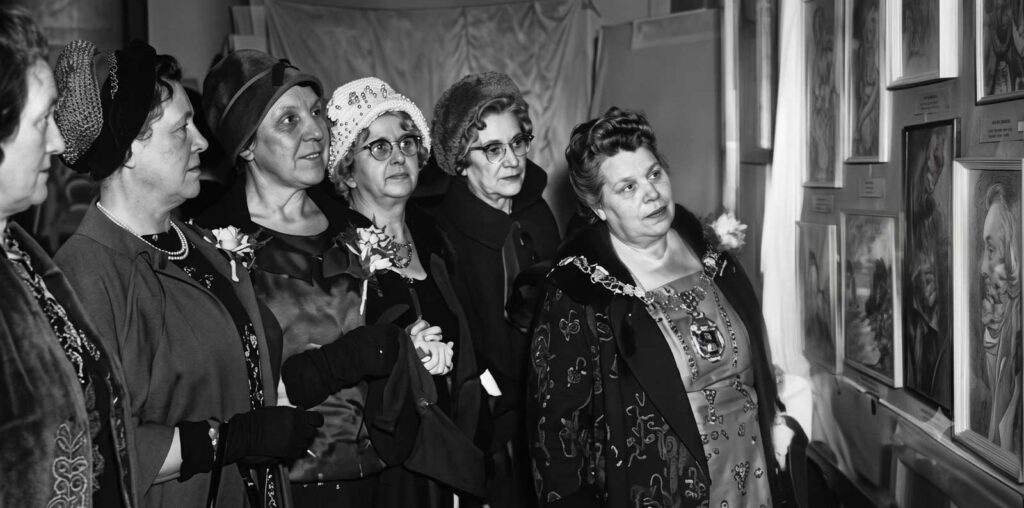
Ryelands was the home of a range of adult education and recreation programmes led by groups including the Women’s Institute, the Workers’ Educational Association and the Lancaster & District Choral Society. Others using the building for events included the Salvation Army. The building remained in periodic use for adult education in subsequent years. Annual art exhibitions also continued.
January 1960 saw Lancashire Education Committee advertise for a male caretaker for Ryelands House, with an offered wage £9.05.6d. for a 44 hour week, “with additional payments for evening lettings”.
The vaccination campaign against polio continued, as reported in March 1960, offered to anyone between 15 – 40 not already vaccinated.
Despite the counter attractions of television and the rival organisations which were developing around them, Skerton Women’s Evening Institute had many new members in all age groups join various classes, 858 in all for 1960 – although there was disappointment from head teacher Miss M. Whittaker that the drama group had not functioned and that a class for ballroom dancing had not lasted the term.
July 1960 saw an end to chiropody services at a room at Ryelands House through the kindness of the Divisional Medical Officer, just one aspect of the local service, duties handed over to the County Council.
Late December 1960 saw a ruckus at the City Council, when councillors overruled the opinion of the Properties Committee and voted to authorise the use of the Council’s sound equipment for Ryelands House, in addition to the Town Hall. The Old Age Pensioners Association was offered use of the equipment free of charge.
In June 1961, the Council voted to provide a car park outside Ryelands House, for the sum of £425, that could provide parking for some 30 cars, which involved the felling of tree in the courtyard. The move came to dissuade drivers from parking and blocking the approach drives, but even after it was built, there were appeals for drivers to use it, as congestion continued. There was repeated criticism of parking congestion later in the decade, too, some drives accused of a “shocking” lack of consideration for the park.
September 1961 saw a record entry for women’’s classes — 1388 — who enrolled for classes at Skerton and Queen Street Women’s Evening Institutes. Students enrolling at Ryelands House for the Skerton Institute totalled 796 and on enrolment night there were long queues stretching through the park. Miss M. Whittaker, head teacher of both Institutes, told the Lancaster Guardian: “We enrolled far more people than I can ever remember.”
By March 1962, the numbers of enrolments was becoming an issue, as women had more leisure time. There were calls for a new purpose built centre to host Women’s Institute activities, and it was suggested Ryelands House was no longer big enough to cope with demand.
The popularity of classes continued. In 1964, alongside booming numbers of Morecambe College of Further Education, the Lancaster Women’s Evening Institute were also enjoying a student boom. In the annual September enrolment, more than 800 people signed up for classes at the Queen Street and Greaves Centres in Lancaster, and nearly the same total signed up at Ryelands House. The Lancaster Guardian reported students were still asking to join – and numbers were likely to build up still further as the classes get under way. Popular classes included upholstery, soft furnishing, dressmaking and cookery – and for a car maintenance course, there were more would be students than places. Language classes were becoming increasingly popular and more men were booking courses in French, German, Italian and Spanish. By the end of the year, there were repeated calls for a new community centre to the Council, a growing sense of urgency clear in newspaper reports of the time.
By October 1967, with current enrolments numbering some 2369 across the WI’s courses, the County Education Committee, supported by Lancaster’s Education Committee, gave the go-ahead for negotiations with the Ripley Church of England Educational Trust to buy the former St. Thomas’s Girls’ Secondary School to become a new WI and education centre for the city. The purchase price was estimated to likely be in the region of £8000, with adaptations costing about £10,000.
Early 1966 saw The Skerton Aged Men’s Rest, which met regularly at Ryelands House, become Skerton Retired Men’s Club, the name considered more appropriate.
Sadly, not all visitors to the Park were as welcome as others, as its facilities suffered a spate of vandalism at the hands of hooligans who, in March 1966, although they reportedly amused themselves with “stupid pranks” and did little major damage.
April 1966 saw arguments among members of the Lancaster and Morecambe Divisional Education Executive about whether to spend £250 on a grand piano for Ryelands House or to buy a cheaper upright piano, that, initially, the committee deferred on after concerns about the cost. The old piano was, apparently, very old, and beyond repair.
There seemed to be a bit of snobbery going on, too, some members alarmed a grand piano wouldn’t be used simply for teaching purposes, but by members of the public – including, to the dismay of Councillor Mrs. D. Henderson, old age pensioners! The discussion appears to have stirred up the local press calling attention to what they perhaps regarded as a penny pinching debate, because by the following month, after numerous offers to provide both a secondhand grand or upright for use in the House, the committee claimed no request for a grand piano had been made in the first place, and an upright would be provided!
It seems the costs of running Ryelands House were very much on the mind of councillors at this time, with a decision to install a coke boiler to heat it made in July 1967, instead of a more modern heating system, at the first council meeting for the new Mayor, Councillor Charles Denwood… ironically described as “A baptism of fire” by the Lancaster Guardian.
The same month saw Lancashire Education Committee advertise for a new Lancaster Institutes’ Ryelands House Centre Caretaker, at a salary of £l2 18s. 4d. for 40 hour week.
Planning ahead for the early 1970s, in 1968 the County Council was considering its future health programmes, which included a proposal for the introduction of new health services at a cost of £31,500 health services clinic in the Ryelands Park area in 1971-72, to replace the child welfare, chiropody and antenatal sessions in rented accommodation in Ryelands House. The plans were announced as part of £1 million provision of services, that included a new mental health adult training centre and a care hostel in Bulk Road.
1970s
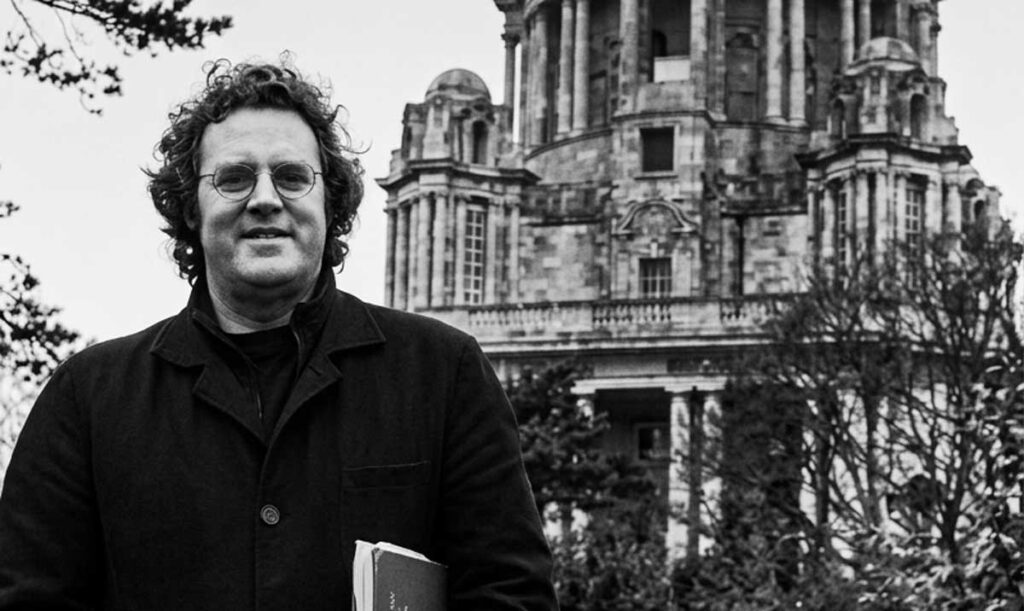
In 1975, The Dukes staged a new play by the late David Pownall, today regarded as one of Britain’s foremost and very highly regarded sound/radio playwrights. Li’le Jimmy Williamson focuses on the myth and reality of power surrounding the life and times of the Lancaster linoleum millionaire, Lord Williamson – former owner of Ryelands House.
• Read “Who Remembers “Li’le Jimmy Williamson” at The Dukes?”
Perhaps Mr Pownall’s play disturbed the ether, because in April 1979, two workmen who were carrying out internal decoration at Ryelands House claimed to have had a close encounter with the ghost of the famous multi-millionaire. Malcolm Greenwood and Kevin Blezard told local papers that they believed they saw the misty figure of Lord Ashton in the room where he died, almost 50 years ago. The possible haunting was re-reported in the Lancaster Guardian in April 2004, 25 years later…
1980s & 1990s
The cost of the upkeep of Ryelands led Lancaster City Council to consider selling or even demolishing it in the 1980s and 1990s, but public affection for this symbol of Lancaster’s heritage meant it remained a community asset providing services including special educational needs support and health care until the closure of the house in 2023.
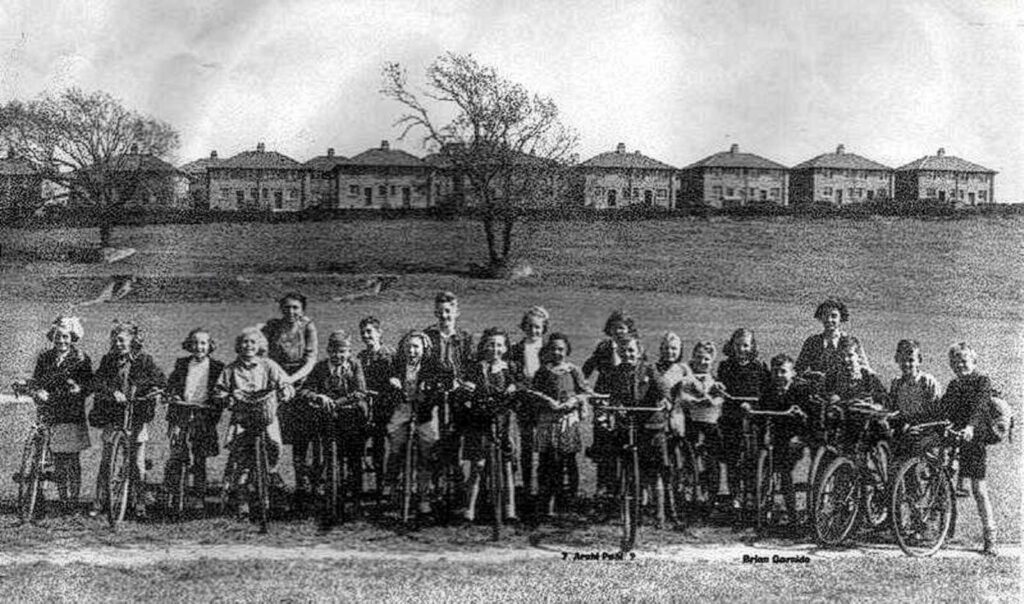
Organisations using the House for meetings in the 1980s included Lancaster Cycling Club. 10th March 1986 saw the inaugural meeting of the CancerCare charity’s Local Masectomy Group in the Health Education Room.
In 1986, at a time when some 2500 people in the Lancaster and Morecambe were wrestling with some form of alcohol addiction, Ryelands House was one of the locations for local counselling services for the problem, alongside other venues such as Harvey House.
In the wake of the Chernobyl nuclear disaster in 1986, the County Council revealed in July that it had decided earlier that year that Ryelands House would be one of 22 “rest places” for evacuees in the event of a disaster at Heysham nuclear power station.
2000s
In addition to its use for health care, local groups continued to meet at Ryelands House, including The Red Rose Brass Band. The park paths were widened in 2004.
Not everyone was pleased when the City Council found the finance to convert the footpaths in Ryelands Park into cycleways, that also enabled vehicle access to Ryelands House, one local resident writing to the Lancaster Guardian to raise concerns about speeding cyclists causing accidents.
The building was victim to vandalism in September 2004, two windows destroyed at a cost of some £400.
In December 2004, the Lancaster Guardian reported that the Children’s Centre, a new building, right next door to Ryelands House, should be ready to occupy by June 2005. The work was delayed by the Grade One Listed Status of Ryelands House, which meant any materials used to build the Centre had to be approved by English Heritage and the city council’s conservation officer.
The Centre was described as “the purpose-built home of the Sure Start North Lancaster programme, “which helps some of the most deprived people in the city.”
Launched in 2001, Sure Start North Lancaster spent its first three years in a few cramped offices in Ryelands House, with various groups located at venues across the area. Programme manager Judith Thomas said this was a “mixed blessing”.
“It’s been difficult without one central base,” she admitted. “But the lack of a building has meant that other venues have been found, which has given the opportunity to form good working partnerships with other organisations.”
2020s
Although, as of July 2026, Ryelands House remains boarded up, the park, of course, continues to provide for the benefit of the people of Lancaster. Plans are progressing to restore the building to life.
Chornology compiled by Matt Cole, with additional input from John Freeman and Simon Gershon
Do You Have any Memories of Ryelands House?
Following an announcement here on the Ryelands Trust website, several locals have offered memories of its uses since it was acquired by the Council. Can you help provide more? Please do let us know!
In a thread on the Facebook Lancaster Past and Present Group, Patricia Fawcett recalls St. Thomas School used the kitchens for domestic science together with one in Storey Institute near to the Castle. “The class was divided between the two. Later on I worked in the Parks and Cemeteries office, upstairs and first two windows on the left. Gardens were beautiful in the sixties.”
Elaine Finn recalls The Evergreen Club ran for many years under the guidance of Mrs Senior and her team.
Locals also recall the two storey library that was in what used to be the stables for the house.